
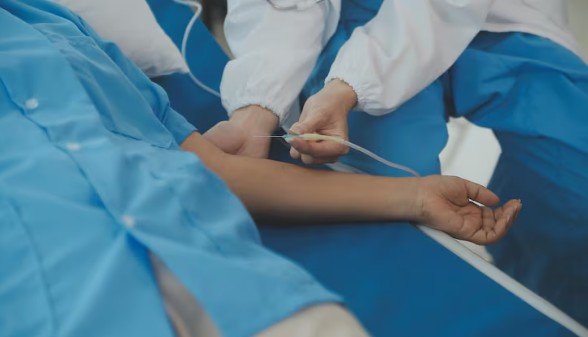
A PICC Line Insertion Doctor in Delhi NCR can help patients who need reliable intravenous access for treatment over an extended period. A PICC line, or peripherally inserted central catheter, is a thin, flexible tube placed through a vein in the arm and advanced toward a larger vein near the heart.
Want a direct connection with us on WhatsApp? Click now.
Unlike a standard IV cannula, which is usually used for shorter-term treatment, a PICC line can provide longer-term venous access when a patient needs repeated medications, fluids, nutrition, or blood tests.
Understanding why a PICC line may be recommended can make the procedure feel less unfamiliar and help patients discuss their treatment options with their healthcare team.
What Is a PICC Line?
A PICC line is a long, flexible catheter inserted into a vein, commonly in the upper arm. The catheter is carefully guided through the vein until its tip reaches a large central vein.
Once placed, the line provides healthcare professionals with access to the bloodstream without needing to repeatedly insert a new peripheral IV.
The insertion is performed using appropriate sterile precautions. Depending on the patient’s situation and the healthcare facility, imaging guidance may be used to help with accurate placement.
A PICC line may have one or more lumens. These channels allow medications or other prescribed treatments to be administered through the catheter.
Why Might a Patient Need a PICC Line?
There are several situations in which a PICC line may be considered. The decision depends on the patient’s medical condition, treatment plan, vein condition, and expected duration of intravenous therapy.
Long-Term Intravenous Medication
Some patients require intravenous medicines for a prolonged period. Repeated placement of short peripheral IV cannulas can become uncomfortable and may be difficult when suitable veins are limited.
A PICC line can provide more consistent access for prescribed treatment.
Antibiotic Therapy
Patients who need extended courses of intravenous antibiotics may sometimes require a PICC line. This can be particularly useful when treatment continues beyond the period typically suited to a standard peripheral IV.
The healthcare team determines whether a PICC is appropriate based on the infection, medication, treatment duration, and overall condition.
Chemotherapy and Other Cancer Treatments
Some cancer treatments require dependable venous access. A PICC line may be considered for selected patients receiving chemotherapy or other intravenous therapies.
The suitability of a PICC line depends on the specific treatment plan and the patient’s individual circumstances.
Intravenous Nutrition or Fluids
Patients who cannot receive adequate nutrition through the digestive system may sometimes require intravenous nutritional support. A central venous catheter such as a PICC may be used when clinically appropriate.
Similarly, some patients requiring ongoing intravenous fluids or other treatments may benefit from reliable venous access.
How Is PICC Line Insertion Performed?
PICC line insertion is generally carried out by a trained healthcare professional using sterile technique.
Before the procedure, the patient’s medical history, veins, treatment requirements, and other relevant factors are assessed. The skin is cleaned carefully, and local anaesthesia may be used to reduce discomfort.
The catheter is then introduced into a suitable vein, often in the upper arm. It is advanced carefully toward the central venous system. Imaging or other methods may be used to confirm the catheter’s position.
After insertion, the line is secured and dressed appropriately. The healthcare team provides instructions about keeping the area clean and recognizing possible problems.
For patients seeking a PICC Line Insertion Doctor in Delhi NCR, Dr. Pulkit Rangarh emphasizes the importance of appropriate assessment and careful catheter placement based on the patient’s treatment needs.
What Are the Benefits of a PICC Line?
One of the main advantages of a PICC line is that it can reduce the need for repeated peripheral IV insertions during an extended course of treatment.
It may also provide dependable venous access for certain medications and therapies. For patients with difficult peripheral veins, having an established access route can make ongoing treatment more manageable.
However, a PICC line is not automatically suitable for every patient. The potential benefits should always be weighed against possible risks and the patient’s individual circumstances.
What Care Does a PICC Line Require?
Proper PICC line care is important after insertion. The dressing and catheter should be handled according to the instructions provided by the healthcare team.
Patients should avoid unnecessary manipulation of the line and follow instructions regarding bathing, dressing changes, flushing, and activity.
It is also important to contact the healthcare team if there are concerning changes around the catheter site, such as increasing redness, swelling, pain, discharge, or other unusual symptoms.
Dr. Pulkit Rangarh recommends following the care plan provided after PICC line placement because appropriate maintenance can help reduce avoidable complications.
When Should You Consider a PICC Line?
A PICC line may be considered when a patient is expected to need longer-term intravenous treatment or reliable venous access. It may be useful when repeated IV access is difficult or when the prescribed treatment is better suited to central venous administration.
The decision should not be based only on convenience. A healthcare professional needs to consider the patient’s diagnosis, medications, expected treatment duration, vein health, and other relevant clinical factors.
If you are looking for a PICC Line Insertion Doctor in Delhi NCR, discussing your treatment plan with Dr. Pulkit Rangarh can help you understand whether this type of vascular access may be appropriate for your situation.
Conclusion
A PICC line is a flexible catheter that provides access to the bloodstream for patients who need certain intravenous treatments over a longer period. It can reduce the need for repeated peripheral IV insertion and may be useful for selected medications, antibiotics, cancer treatments, nutrition, fluids, and other therapies.
However, PICC line placement is an individualized medical decision. Proper assessment, insertion technique, catheter care, and follow-up are important for safe and effective use.
For more information or to schedule a consultation, visit https://share.google/bI1IzCyOg3uUQW9n3 and take the first step toward achieving your dream.