
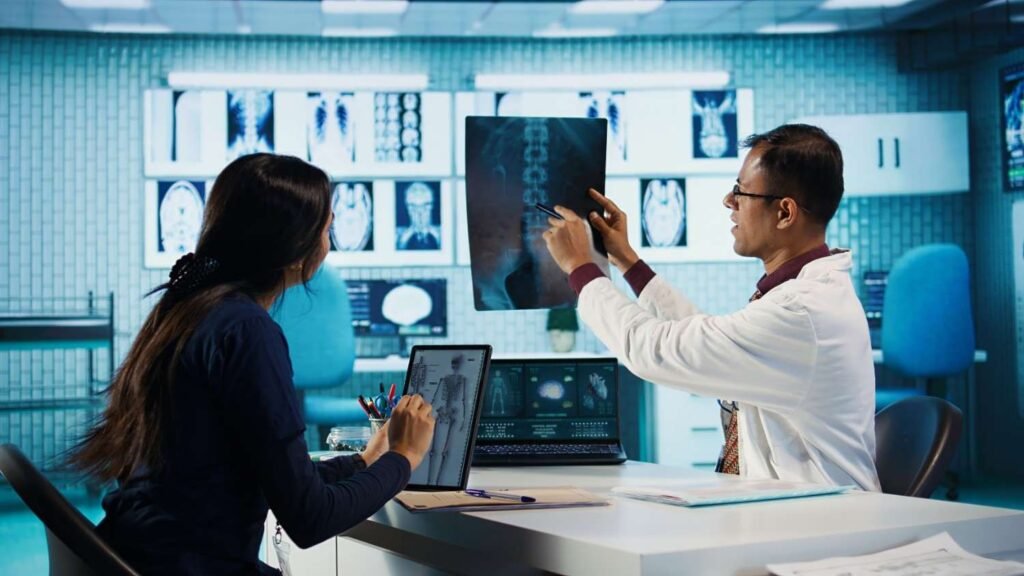
Radiology plays an important role in modern healthcare by helping doctors look inside the body without surgery. From detecting fractures to identifying problems affecting the brain, lungs, abdomen and joints, medical imaging can provide valuable information for diagnosis and treatment planning. A Radiologist in Gurgaon can interpret different types of diagnostic images and provide findings that help other specialists make informed medical decisions.
Want a direct connection with us on WhatsApp? Click now.
Radiology is not limited to one type of scan. Depending on a person’s symptoms and medical history, a doctor may recommend an X-ray, ultrasound, CT scan, MRI, mammography or another imaging examination. Each method has a specific purpose and can help identify different conditions.
What Is Radiology?
Radiology is a medical field that uses imaging techniques to examine structures and functions inside the body. These images can help doctors identify abnormalities, monitor known conditions and assess how a patient is responding to treatment.
A radiologist reviews the images, looks for relevant findings and prepares an imaging report. The results are then considered alongside symptoms, physical examination findings and other investigations.
Dr. Pulkit Rangarh emphasizes the importance of appropriate imaging because the right examination can provide useful information while avoiding unnecessary tests.
Medical Conditions That Can Be Diagnosed With Radiology
Different imaging techniques are suited to different organs and medical concerns. Some of the common conditions that may be evaluated with radiological imaging include the following.
Bone Fractures and Joint Injuries
X-rays are commonly used to examine bones and identify fractures, dislocations and certain abnormalities. They can also help doctors assess injuries involving the arms, legs and other skeletal areas.
For more complicated injuries, CT or MRI may provide additional information about bones, cartilage, ligaments and surrounding soft tissues.
Lung and Chest Conditions
Chest X-rays are frequently used to examine the lungs and other structures within the chest. Imaging may help doctors investigate symptoms such as persistent cough, breathing difficulty or chest discomfort.
Depending on the clinical situation, CT scans can provide more detailed images of the lungs and chest. They may be used when a doctor needs a closer assessment of abnormalities that are not sufficiently characterized on an X-ray.
Brain and Neurological Conditions
CT and MRI scans are important tools for evaluating the brain. They can help doctors investigate conditions involving brain tissue, blood vessels and other structures.
Imaging may be recommended when symptoms such as severe headache, weakness, changes in vision, seizures or other neurological concerns require further evaluation. MRI is particularly useful for producing detailed images of soft tissues.
Abdominal and Digestive Problems
Ultrasound, CT and MRI can be used to examine abdominal organs such as the liver, gallbladder, pancreas, kidneys and spleen.
Imaging may help identify conditions such as gallstones, kidney stones, cysts, inflammation, fluid collections and certain masses. The choice of scan depends on the suspected condition and the information the treating doctor needs.
Kidney and Urinary Tract Conditions
Radiological imaging can also assist in evaluating the kidneys and urinary system. Ultrasound and CT are commonly used in appropriate clinical situations to investigate kidney stones, obstruction, cysts and other abnormalities.
Imaging can help determine the location and extent of a problem and may support decisions about further treatment.
Breast Abnormalities
Mammography and breast ultrasound are important imaging methods for evaluating breast changes. They may be recommended when there is a breast lump, pain, unusual discharge or another clinical concern.
When necessary, additional imaging or image-guided procedures may be recommended to investigate an abnormal finding more closely.
Spinal Conditions
Back and neck problems may require imaging when symptoms are persistent, severe or associated with particular clinical findings. X-rays can show certain changes in the bones and alignment of the spine.
MRI can provide detailed information about discs, nerves, the spinal cord and other soft tissues. It may therefore be useful when conditions such as disc-related problems or nerve compression are suspected.
Soft-Tissue and Musculoskeletal Problems
MRI and ultrasound can help evaluate muscles, tendons, ligaments and other soft tissues. These scans may be useful for sports injuries, tendon problems, ligament injuries and certain joint conditions.
The imaging method is selected according to the body part involved and the suspected diagnosis.
How Different Imaging Tests Help
No single imaging test is suitable for every medical condition.
X-ray: Often used for bones and chest evaluation.
Ultrasound: Uses sound waves and is useful for examining many soft tissues and abdominal or pelvic structures.
CT scan: Produces detailed cross-sectional images and can be useful for evaluating bones, organs and certain acute conditions.
MRI: Provides highly detailed images of soft tissues, including the brain, spine, muscles, joints and other structures.
Mammography: Specialized breast imaging used to evaluate breast tissue and detect certain abnormalities.
A doctor chooses an examination based on symptoms, medical history, physical findings and the clinical question that needs to be answered.
Why Accurate Image Interpretation Matters
Obtaining an image is only one part of the diagnostic process. Careful interpretation is equally important. A radiologist examines the images systematically and documents relevant findings in a report.
Dr. Pulkit Rangarh explains that imaging findings should always be interpreted in the appropriate clinical context. An abnormal-looking image does not automatically mean a serious disease, and a normal scan does not necessarily explain every symptom.
This is why radiology reports are generally reviewed along with the patient’s history, examination and other test results.
When Should You Consider Radiological Evaluation?
Radiological imaging may be recommended for many different reasons, including unexplained pain, injuries, persistent symptoms, suspected organ problems or monitoring of an existing condition.
It is important not to choose a scan solely because it is available. The treating doctor can determine whether imaging is appropriate and which examination is most suitable.
If imaging has been advised, consulting a qualified Radiologist in Gurgaon can help ensure that the examination is properly interpreted and documented.
The Role of a Radiologist in Modern Diagnosis
Radiologists work closely with other healthcare professionals. Their reports can help orthopaedic doctors, physicians, neurologists, surgeons, oncologists and other specialists understand what is happening inside the body.
Dr. Pulkit Rangarh highlights the value of combining imaging findings with the patient’s overall clinical picture rather than relying on an image in isolation.
With advances in medical imaging, radiology continues to support earlier detection, more precise diagnosis and better treatment planning across many areas of medicine.
Conclusion
Radiology can help evaluate a wide range of medical conditions, from fractures and joint injuries to abnormalities involving the brain, lungs, abdomen, breasts, kidneys and spine. X-rays, ultrasound, CT scans, MRI and mammography each provide different types of information, making the choice of imaging important.
When an imaging examination is recommended, accurate interpretation can provide valuable guidance for the next stage of care. Dr. Pulkit Rangarh encourages patients to discuss their symptoms and imaging requirements with their treating doctor so the most appropriate diagnostic approach can be considered.
For patients seeking imaging evaluation and expert interpretation, consulting a Radiologist in Gurgaon can be an important part of the diagnostic process.
For more information or to schedule a consultation, visit https://share.google/bI1IzCyOg3uUQW9n3 and take the first step toward achieving your dream.