Interventional radiology has changed the way many medical conditions are diagnosed and treated. Instead of relying only on traditional surgery, interventional radiologists can use image guidance to reach specific areas of the body through small openings. This allows many procedures to be performed with greater precision and, in suitable cases, less recovery time.
An Interventional Radiologist in Gurgaon uses different imaging techniques depending on the condition being treated and the type of procedure required. These images help the doctor see structures inside the body in real time and guide instruments safely toward the treatment area.
Want a direct connection with us on WhatsApp? Click now.
Why Is Imaging Important in Interventional Radiology?
Imaging is central to most interventional radiology procedures. It gives the doctor a detailed view of internal organs, blood vessels, tissues and other structures without requiring a large surgical incision.
During treatment, imaging can help the radiologist:
- Locate the exact area that needs treatment
- Guide needles, catheters and other instruments
- Monitor the procedure in real time
- Avoid important blood vessels and nearby structures
- Confirm whether the intended treatment has been completed
Dr. Pulkit Rangarh uses image-guided techniques as part of interventional radiology care, with the choice of imaging based on the individual procedure and clinical requirement.
Common Imaging Techniques Used in Interventional Radiology
Several imaging methods can be used during interventional procedures. Each has a different role and provides particular advantages.
Ultrasound Guidance
Ultrasound uses sound waves to create images of structures inside the body. It does not use ionizing radiation and can provide real-time imaging during a procedure.
An Interventional Radiologist in Gurgaon may use ultrasound guidance for procedures where soft tissues, fluid collections or certain blood vessels need to be visualized.
Ultrasound can be particularly useful when the doctor needs to guide a needle accurately. The image can be viewed continuously while the instrument is moved toward the target.
X-Ray and Fluoroscopy
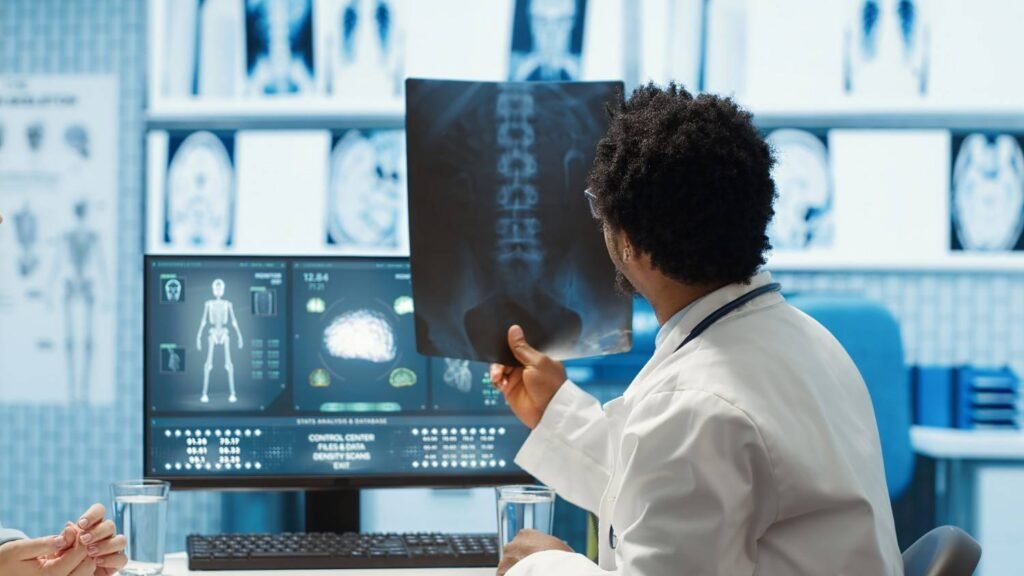
X-ray imaging is another important tool in interventional radiology. Fluoroscopy provides moving X-ray images, allowing the radiologist to observe instruments as they pass through the body.
It is commonly useful for procedures involving blood vessels and other pathways where a catheter needs to be positioned precisely.
Contrast material may sometimes be used to make certain structures, such as blood vessels, easier to see on the images. Dr. Pulkit Rangarh can determine whether contrast-enhanced imaging is appropriate based on the planned procedure and the patient’s circumstances.
CT Scan Guidance
Computed tomography, commonly called CT, creates detailed cross-sectional images of the body. These images can help identify the exact location, size and position of a target area.
CT guidance may be used when a lesion or other treatment target is difficult to visualize adequately with ultrasound or standard X-ray imaging.
For an Interventional Radiologist in Gurgaon, CT can provide valuable anatomical detail when planning and performing selected minimally invasive procedures.
MRI Guidance
Magnetic resonance imaging (MRI) uses magnetic fields and radio waves to create detailed images of the body. MRI can provide excellent visualization of many soft tissues.
Although MRI-guided interventions are less commonly used than ultrasound, CT or fluoroscopy for many routine interventional procedures, MRI can have an important role in selected situations.
The choice depends on the anatomy involved, the procedure being performed and the available equipment.
How Does the Radiologist Choose the Right Imaging Method?
There is no single imaging technique that is best for every interventional procedure. The choice depends on several factors.
The doctor may consider:
- The location of the treatment area
- The type and size of the target
- Nearby organs and blood vessels
- Whether real-time imaging is required
- The patient’s medical condition
- The type of instrument being used
- The need for contrast imaging
Dr. Pulkit Rangarh evaluates these factors before determining the most appropriate image-guidance approach for an individual patient.
Benefits of Image-Guided Interventional Procedures
One of the main advantages of image guidance is precision. Instead of navigating based only on surface anatomy, the doctor can use internal images to guide the procedure toward the intended target.
This approach can support minimally invasive treatment, which may involve a smaller entry point than conventional open surgery. Depending on the procedure, patients may also experience less tissue disruption and a potentially shorter recovery period.
However, the expected benefits vary according to the procedure and the patient’s overall health. An Interventional Radiologist in Gurgaon can explain the expected approach, potential benefits and possible risks before treatment.
What Should Patients Expect During Imaging-Guided Treatment?
Before an interventional radiology procedure, the doctor usually reviews relevant medical history and imaging studies. The patient may also receive specific instructions depending on the procedure.
During treatment, the selected imaging equipment is used to identify the target and guide the required instruments. Local anesthesia or other forms of sedation may be used when appropriate.
Throughout the procedure, imaging allows the medical team to monitor the treatment and make adjustments when necessary.
Dr. Pulkit Rangarh focuses on using appropriate image guidance according to the needs of each procedure rather than relying on one imaging method for every patient.
Conclusion
Imaging is the foundation of modern interventional radiology. Ultrasound, fluoroscopy, X-ray, CT and, in selected cases, MRI can help doctors visualize internal structures and guide minimally invasive treatments with precision.
If you are considering an image-guided procedure, an Interventional Radiologist in Gurgaon can assess your condition and determine which imaging method is most suitable for your treatment. Dr. Pulkit Rangarh can help patients understand the planned procedure, the role of imaging and what to expect during treatment.
For more information or to schedule a consultation, visit https://share.google/bI1IzCyOg3uUQW9n3 and take the first step toward achieving your dream.